Rafael Berger · 5 November 2026
Policy Overlaps Between Medical Record Modernization and Safety Regulations for Digital Spaces
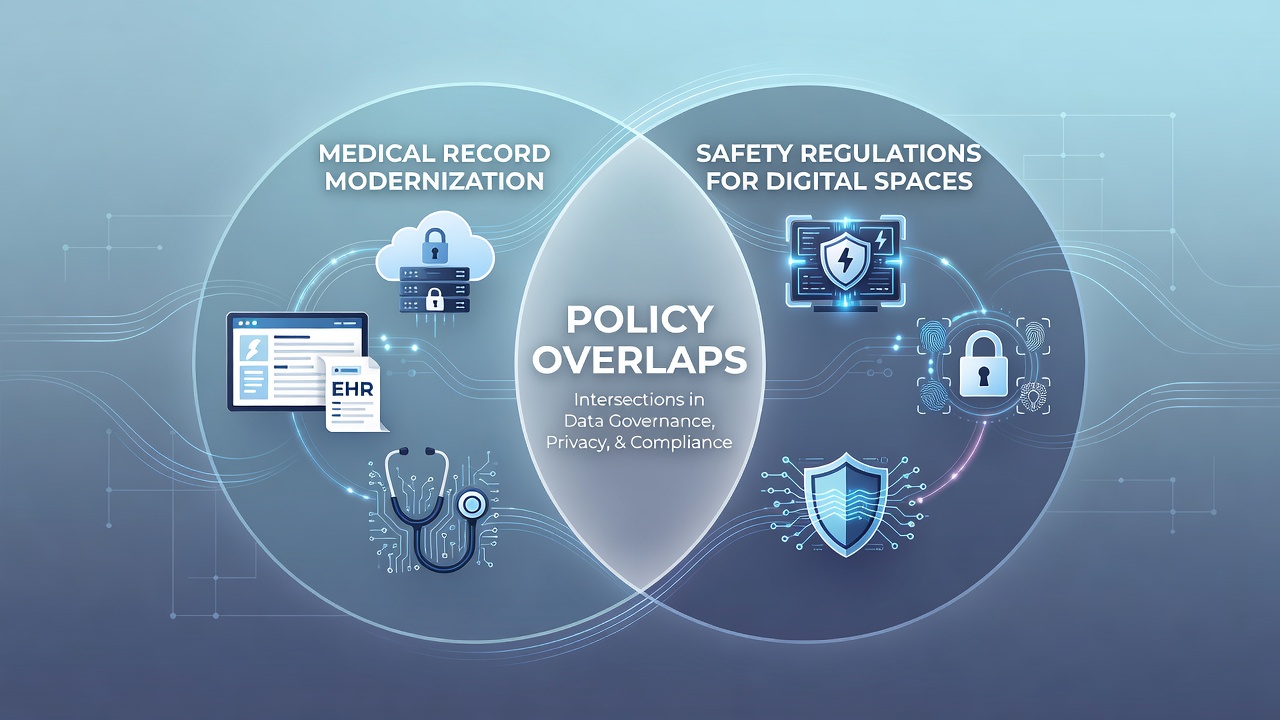
Medical record modernization efforts have accelerated across multiple regions since the early 2020s, with governments pushing for electronic health record systems that integrate seamlessly with broader digital infrastructures, while safety regulations for digital spaces continue to expand in scope to address data handling, cybersecurity threats, and user protections in online environments. These two policy areas intersect at points where health data moves through digital platforms, creating requirements that organizations must satisfy simultaneously under frameworks from different regulatory bodies. Observers note that the overlaps become particularly visible when modernization initiatives require real-time data sharing across borders or through third-party cloud services, which in turn triggers compliance with digital safety standards focused on privacy and threat mitigation.
Core Elements of Medical Record Modernization
Countries have pursued digitization of medical records through targeted legislation and funding programs that standardize data formats, improve interoperability, and enable patient access via secure portals. In the United States the Office of the National Coordinator for Health Information Technology has driven adoption of certified electronic health record technology, with ongoing updates that align with broader federal data exchange goals. Similar programs operate in Canada through Canada Health Infoway and in Australia via the Digital Health Agency, each emphasizing secure transmission protocols that reduce reliance on paper systems. These efforts often include mandates for audit trails, encryption during transmission, and integration with national health identifiers, all of which generate large volumes of sensitive information that must travel across digital networks.
Safety Regulations Governing Digital Spaces
Digital safety regulations have evolved to cover online platforms, data processors, and service providers that handle personal information, with particular attention to sectors like healthcare where breaches carry high consequences. The European Union maintains the General Data Protection Regulation alongside the NIS2 Directive, which sets cybersecurity requirements for essential entities including health service providers. In parallel, Australia enforces the Privacy Act and the Australian Cyber Security Centre guidelines that apply to digital health systems, while Canada applies provisions under the Personal Information Protection and Electronic Documents Act that intersect with provincial health privacy laws. These frameworks require risk assessments, incident reporting within defined timeframes, and safeguards against unauthorized access or misuse of digital content.
Where the Two Policy Streams Converge
Convergence occurs when modernized medical records rely on digital platforms that fall under safety regulations, forcing compliance teams to reconcile standards from health-specific rules with those from broader digital governance. For instance, patient portals that allow individuals to view and share records must incorporate authentication mechanisms and content moderation features to meet digital safety expectations, even as they satisfy medical data accuracy requirements. Data flows between hospitals, insurers, and research institutions frequently pass through cloud environments, triggering obligations under both health modernization statutes and digital safety directives that address cross-border transfers and breach notification. Researchers have documented cases where organizations updated their electronic health record platforms in 2025 to meet new interoperability targets, only to discover that the same changes activated additional reporting duties under digital safety laws.

November 2026 marks a period when several jurisdictions plan to implement updated guidance on these intersections, including revised technical standards for secure health data exchange that incorporate digital safety testing protocols. Government agencies in multiple countries have scheduled consultations to clarify how medical record modernization timelines align with digital safety enforcement schedules, particularly around encryption standards and access logging. Those who manage hospital IT systems report that mapping these requirements early helps avoid duplicated audits and conflicting technical specifications. One study from a European research consortium revealed that integrated compliance approaches reduced administrative overhead by aligning record access controls with platform security certifications.
Practical Implications for Stakeholders
Healthcare providers, technology vendors, and regulatory agencies face the task of interpreting overlapping rules without creating redundant processes. Industry groups such as the Global Digital Health Partnership have published resources that compare requirements across regions, highlighting common elements like mandatory encryption and breach disclosure timelines. Academic analyses from institutions including the University of Toronto have examined how Canadian health data modernization projects incorporated elements of digital safety legislation, resulting in unified risk management frameworks. Figures from the World Health Organization indicate that more than 120 member states now maintain national digital health strategies that reference both record modernization and online safety considerations, underscoring the global reach of these policy overlaps.
Organizations that operate across borders must track variations in how different authorities define covered entities and reportable incidents. The Australian Digital Health Agency has issued guidance documents that explicitly reference digital safety obligations when implementing national electronic health record features, while the U.S. Department of Health and Human Services continues to coordinate with cybersecurity agencies on protecting digitized medical information. These coordinated efforts demonstrate how policy streams that once developed separately now require joint attention during implementation phases.
Conclusion
Policy overlaps between medical record modernization and safety regulations for digital spaces continue to shape implementation strategies across healthcare and technology sectors. As systems advance toward greater connectivity, stakeholders reference guidance from multiple agencies to maintain compliance while supporting both improved patient data access and robust protections for digital environments. Continued monitoring of regulatory updates, including those scheduled around November 2026, allows organizations to align technical and administrative practices with the full range of applicable requirements.