Rafael Berger · 8 October 2026
Candidate Platforms Highlight Rail and Energy Priorities Following October 2026 Rate Updates
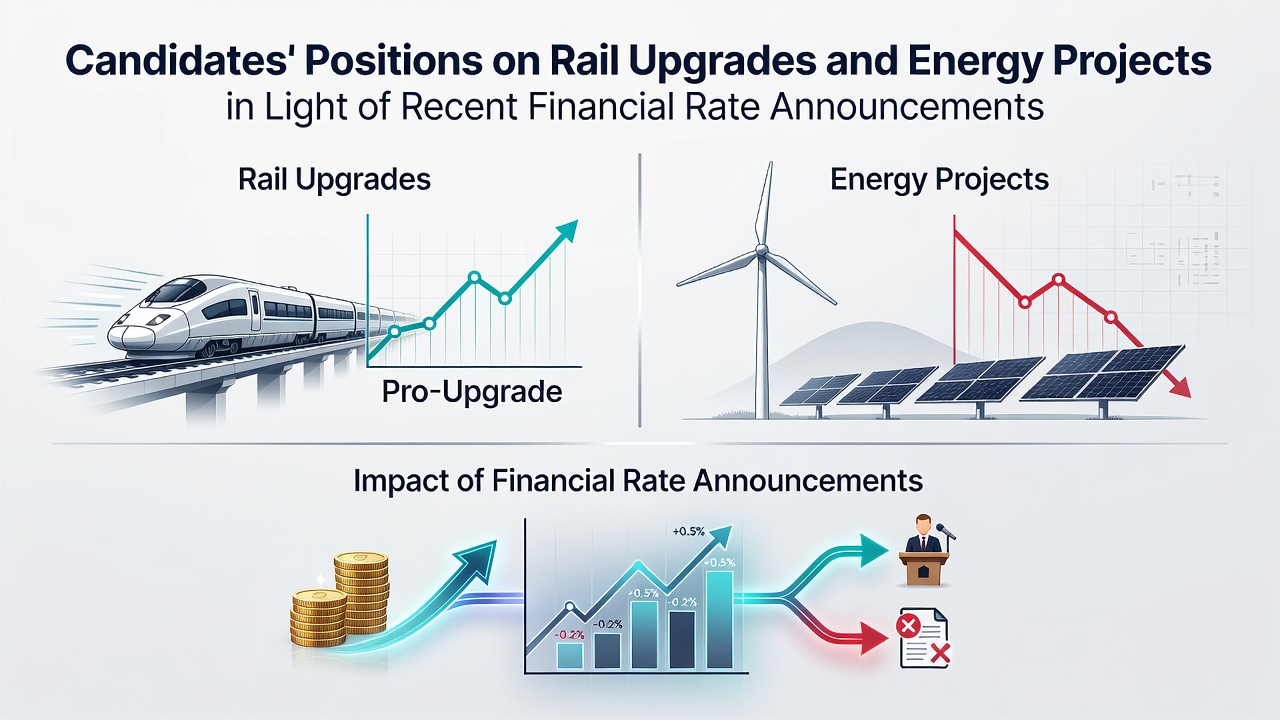
Financial rate announcements released in October 2026 prompted several candidates to clarify their positions on rail upgrades and energy projects, with platforms emphasizing how borrowing costs affect large-scale infrastructure financing. Observers note that these announcements from central banks created immediate ripple effects across project timelines, prompting candidates to address funding mechanisms directly in public statements and campaign materials.
Candidates from multiple regions outlined approaches that tie rail modernization to broader economic stability measures, since higher rates increase the expense of long-term loans needed for track expansions and station improvements. Data from transport ministries show rail projects often rely on mixed public-private funding models, which become more complex when interest rates fluctuate as they did in late 2026.
Background on Rate Announcements and Infrastructure Links
October 2026 rate decisions by major central banks, including adjustments reported through the Federal Reserve, led candidates to revisit cost projections for both rail corridors and renewable energy installations. Platforms released during this period referenced specific figures on how a 0.25 percentage point shift alters annual debt servicing for multi-billion dollar rail initiatives spanning urban and rural areas.
Energy projects faced similar scrutiny, with candidates addressing solar and wind farm developments that depend on capital-intensive construction phases sensitive to lending rates. Figures from industry reports indicate that energy transition timelines can extend by 12 to 18 months when financing costs rise, a point several candidates incorporated into their policy outlines.
Positions on Rail Upgrades
One group of candidates advocated accelerated rail upgrades through dedicated infrastructure bonds structured to lock in rates before further adjustments occur. These positions highlight connections between improved rail networks and regional supply chain efficiency, drawing on data from transport authorities that link faster freight movement to reduced logistics expenses across manufacturing sectors.
Other candidates stressed phased implementation of rail projects, prioritizing segments with existing environmental approvals to minimize exposure to rate volatility. Campaign documents detail plans that sequence upgrades along high-traffic routes first, allowing revenue from passenger increases to offset subsequent borrowing needs as rates stabilize.
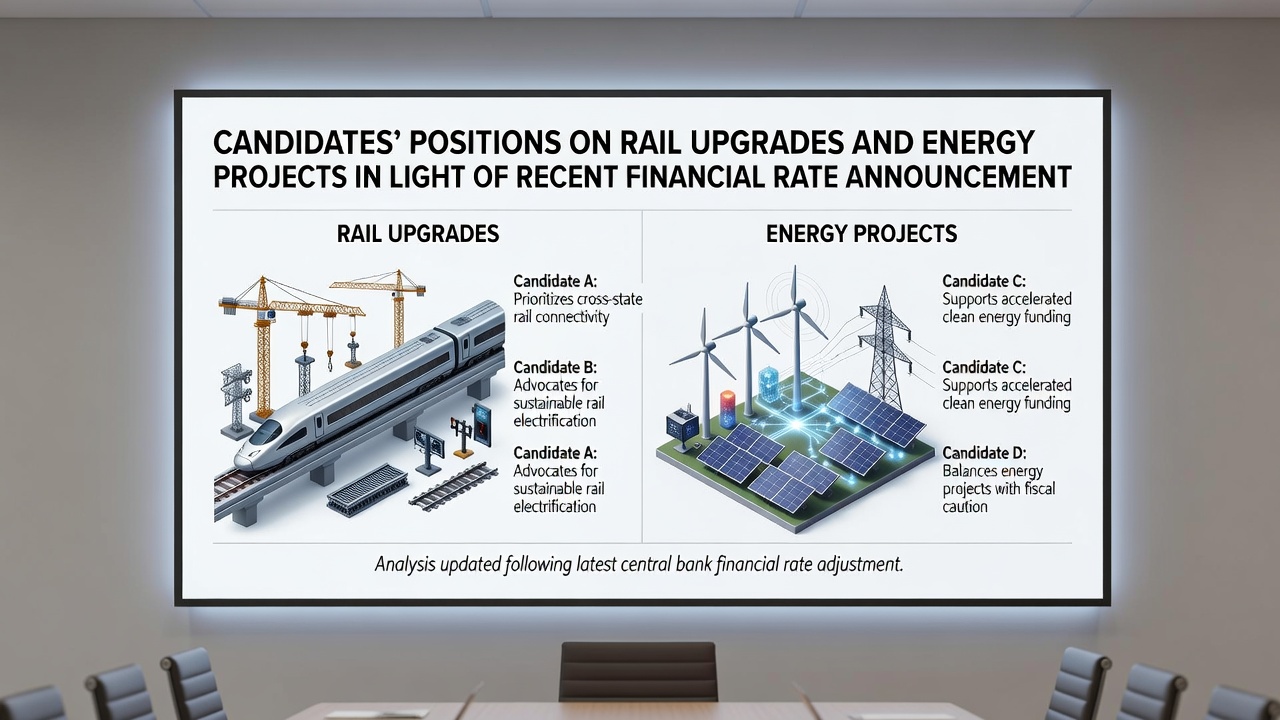
Additional platforms called for greater integration of rail upgrades with urban planning reforms, noting that station developments often serve as catalysts for mixed-use housing projects. Research from academic institutions tracking similar initiatives found coordinated rail and housing investments can generate measurable increases in local employment during construction phases.
Positions on Energy Projects
Candidates addressed energy projects by linking them to grid modernization efforts, with several proposing incentives that offset higher financing costs through tax credit structures tied to project completion milestones. Positions here reference capacity targets set by energy regulators, where offshore wind and battery storage installations require substantial upfront capital that rate changes directly influence.
Some candidates promoted public funding mechanisms for energy storage facilities adjacent to rail hubs, arguing that combined projects reduce overall transmission expenses. Evidence from pilot programs in various jurisdictions shows such co-located developments can improve energy reliability while supporting electrified rail operations.
Yet other candidates focused on regulatory streamlining for energy permits, pointing out that faster approval processes help projects secure financing before rate environments shift again. These approaches draw from case studies where delayed permits led to cost overruns exceeding 15 percent on renewable installations completed after 2024.
Intersections with Financial Considerations
Across platforms, candidates connected rate announcements to procurement strategies for both rail and energy sectors, emphasizing competitive bidding processes that account for variable interest expenses. Government data from multiple regions reveal that suppliers adjust pricing models when central bank policies signal sustained higher rates, affecting contract negotiations in ongoing projects.
Observers tracking these developments note that candidate positions often include contingency clauses for energy and rail initiatives, allowing adjustments if further rate changes materialize in 2027. Such provisions appear in detailed policy papers that project budget impacts under different rate scenarios released by financial oversight bodies.
Conclusion
Candidate positions on rail upgrades and energy projects continue to evolve in response to the October 2026 financial rate announcements, with platforms incorporating updated financing models and project sequencing strategies. These stances reflect broader efforts to align infrastructure goals with prevailing economic conditions while maintaining timelines for critical upgrades and transitions.