
Iris Zimmermann · 10 September 2026
Britain's Bank Rate Choices Ripple Through Reformed Farming Support Systems in Rural Regions
The Bank of England's adjustments to the bank rate have started intersecting with Britain's post-Brexit agricultural reforms in ways that affect cash flow and investment decisions for farmers across rural counties. Data from official records shows the base rate remained elevated through much of 2025 before modest reductions took hold, yet borrowing expenses stayed higher than pre-pandemic levels and this pattern continued into September 2026 when the Monetary Policy Committee next reviewed conditions. Those changes influence everything from equipment loans to land improvements that now fall under the Sustainable Farming Incentive and other environmental schemes rolled out since the end of direct payments based on area. Reformed support systems shifted emphasis toward outcomes such as soil health, biodiversity targets, and reduced emissions rather than simple hectare-based subsidies. Farmers must therefore apply for grants or payments tied to specific practices, and many rely on credit to cover upfront costs before reimbursements arrive. Higher bank rates raise the interest burden on those loans, which in turn stretches budgets in regions where margins already run thin due to weather variability and supply chain costs. Government statistics indicate that farm business income in England averaged lower in the most recent reported periods compared with earlier baselines, partly because financing charges absorbed a larger share of revenue. Rural economies in areas like the South West, East Anglia, and parts of Scotland and Wales feel these effects first because agriculture forms a larger portion of local employment and land use. Supply chain businesses that sell machinery, seed, or feed also see slower orders when farmers defer purchases to manage debt service. Observers note that smaller holdings, which often lack scale to spread fixed costs, encounter sharper pressure than larger operations with diversified revenue streams.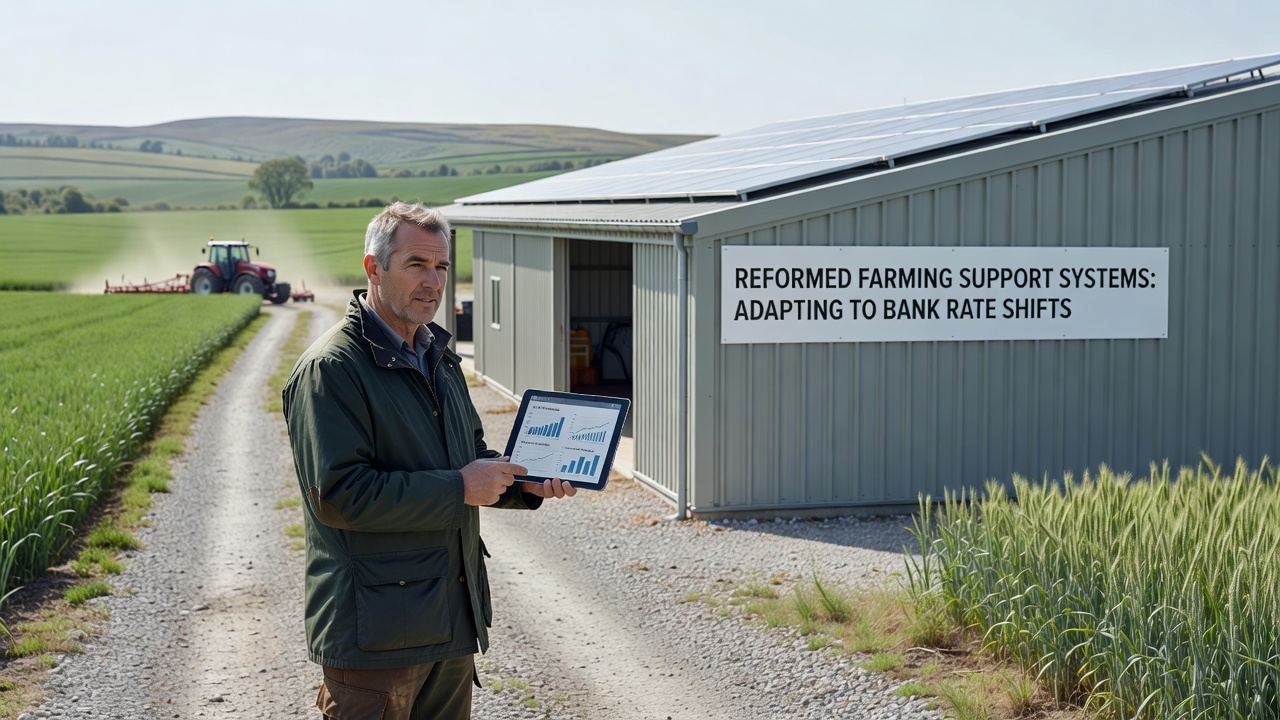
The Bank of England's adjustments to the bank rate have started intersecting with Britain's post-Brexit agricultural reforms in ways that affect cash flow and investment decisions for farmers across rural counties. Data from official records shows the base rate remained elevated through much of 2025 before modest reductions took hold, yet borrowing expenses stayed higher than pre-pandemic levels and this pattern continued into September 2026 when the Monetary Policy Committee next reviewed conditions. Those changes influence everything from equipment loans to land improvements that now fall under the Sustainable Farming Incentive and other environmental schemes rolled out since the end of direct payments based on area. Reformed support systems shifted emphasis toward outcomes such as soil health, biodiversity targets, and reduced emissions rather than simple hectare-based subsidies. Farmers must therefore apply for grants or payments tied to specific practices, and many rely on credit to cover upfront costs before reimbursements arrive. Higher bank rates raise the interest burden on those loans, which in turn stretches budgets in regions where margins already run thin due to weather variability and supply chain costs. Government statistics indicate that farm business income in England averaged lower in the most recent reported periods compared with earlier baselines, partly because financing charges absorbed a larger share of revenue. Rural economies in areas like the South West, East Anglia, and parts of Scotland and Wales feel these effects first because agriculture forms a larger portion of local employment and land use. Supply chain businesses that sell machinery, seed, or feed also see slower orders when farmers defer purchases to manage debt service. Observers note that smaller holdings, which often lack scale to spread fixed costs, encounter sharper pressure than larger operations with diversified revenue streams.Interest Rate Transmission into Agricultural Credit
Bank rate decisions transmit through commercial lenders to farm customers via variable rate loans and overdrafts that remain common in the sector. When the base rate rises, monthly repayments increase even if the principal stays unchanged, forcing some operators to scale back on capital projects required to qualify for new support payments. Figures released by the Department for Environment, Food and Rural Affairs reveal that uptake of the Sustainable Farming Incentive has grown steadily since its full launch, yet participation rates vary by region and farm size, with debt servicing cited as one factor in delayed applications. In September 2026 analysts at the Bank of England projected that any further easing would depend on inflation trends and labour market data, leaving farmers uncertain about future financing costs. This uncertainty complicates multi-year planning needed for environmental measures that deliver payments only after verified results appear. Research from agricultural economists at universities in the UK shows that interest rate sensitivity is higher among livestock and mixed farms than among arable specialists because the former carry more working capital requirements tied to feed and animal purchases.Regional Variations in Impact
Not every rural district experiences the same degree of pressure. Areas with stronger tourism or renewable energy income streams can offset higher borrowing costs more easily, whereas predominantly agricultural counties report tighter conditions. Case studies compiled by regional development agencies highlight that farmers in upland zones, where land quality limits crop options, depend more heavily on environmental stewardship payments and therefore feel credit constraints more acutely when rates remain restrictive. Data indicates that loan approvals for farm improvements dipped in the twelve months leading into 2026 even as grant schemes expanded, suggesting that access to affordable finance rather than scheme design itself now acts as a bottleneck. Those patterns align with broader economic indicators showing reduced business investment across small and medium enterprises during periods of elevated policy rates.